- Have any questions?
- info@shradhakanwar.com

Technology should make us curiouser and curiouser….
Eureka Moments
March 18, 2026The University Beyond the Degree: From “Knowing” to “Becoming”
March 18, 2026Technology should make us curiouser and curiouser….
Oh so cool!
The learning experience today is indeed uber cool. We don’t have to remember everything. The miraculous storage devices are there for our constant reference and retrieval. We don’t have to depend on anyone for answers. The world of search engines helps us traverse across all information boundaries and even beyond. We don’t have to necessarily meet people to have fun. Meet ups at social media sites provide the awesome delight of knowing one another and even getting to know those ahem strangers. We don’t need a visual spectacle of the sun in the morning, it comes right into our rooms through the numerous insta-picture options.Lives have become simpler, smarter and splendid, or have they?
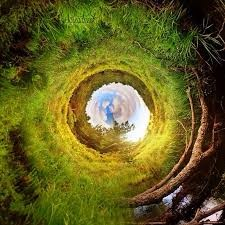
The World of Curiosity: The labyrinth of information and everything new that permeates today’s digitalized world reminds me of the classic metacognitive adventure, ‘Alice in Wonderland;’ the beautiful children’s storybook or the philosophical treatise of Lewis Carol that took a young girl to destinations hitherto unexplored. That magic spell of the wondrous journey of Alice into a new world was actually the unraveling of many wonderful learning experiences. It was the demonstration of an inexplicable, young curious mind that ignited the search for a mysterious alternate existence, leading to adventures of fantastical precedence. Alice’s fall into the rabbit hole was the response of a young, impressionable brain to the fascinating stimuli of the external environment; the rise of the higher order functions of the brain that led to the enquiry, exploration and discovery of the inexplicable. What happened in 1865 as exemplified by Carol’s stupendous articulation is indeed a living reality today. The adventures of the era we thrive in are an illustration of ‘the rabbit hole’ times; where we are completely disheveled by the swarm of information surrounding us, absolutely engaged with the stuff of things on the internet, and totally enamored with technology intrusions. Interesting to further read in this regard, is the explanation of ‘Online rabbit holes’ by Kathryn Schulz in The New Yorker, where she beautifully explains its variable forms.
The Human Brain and the learning quest: ‘The Secret of Millions of Minds that Stay Forever Young’ by Dragos Bratasanu, published in The Huffington Post, brings out the important element of ‘learning’ as the ‘one’ quality that gives a distinctive edge to human beings. As Dragos points out, ‘The greatest minds in human history understood the importance of learning to accelerate creativity, self-expansion and personal growth.’

It is the learning quest of the brain, its desire to explore the unknown and satiate one’s pursuit that makes human existence so unique. It is this urge for discovery that has led to voyages into ethereal spaces and inventions of unimaginable stature. It is this ‘love for finding out’ that gives human beings a unique character making Homo sapiens, the most evolved living species. This distinction of superiority is majorly because of the human brain which is an intriguing marvel of 100 billion neurons and 100 trillion synapses. It is difficult to fathom the tremendous communication potential and neuroplasticity of the brain that makes it adapt to new situations. But it is interesting to explore how the brain deals with ‘curiosity’. In The Washington Post, Emma Saville points out three critical research findings on the response of the brain to curiosity. ‘First, when people are curious to learn the answer to a question they are better at learning that information – not only in the very short term but also after a 24-hour delay. There is also a greater recall of completely unrelated information made known at the same time. Secondly, when curiosity is stimulated, the research found that there is increased activity in the hippocampus, the region of the brain associated with memory. And lastly, there is increased activity in the regions of the brain associated with reward when curiosity is stimulated.’ These findings illustrate the indisputable connection of curiosity in stimulating the human brain and in making it more refined in its functions.
Changing times and curious moments: So with this all fascinating input, it becomes interesting to explore this further to understand the brain’s function with respect to its malleability in adopting newer technologies in today’s techno-cognitive era. What happens when young, curious minds get answers to their search in an instantaneous, unprecedented time? What happens -to their abilities to question, to explore and to satiate their curiosity? What happens to the synaptic connections of the brain when everything is so easily, readily and immediately given? More importantly what will happen to this inimitable function of the brain in the long run? Susan Greenfield explains the threat of changing times to the brain in her article, ‘Modern technology is changing the way our brains work’ adapted from her book ‘The Quest for Identity in the 21st Century by Susan Greenfield’. The revelation startles as we are made to realize that, ‘…we could be sleepwalking towards a future in which neuro-chip technology blurs the line between living and non-living machines, and between our bodies and the outside world.’ Susan highlights the underlying impact on the brain because of the pace of dramatic change, continuous exposure to gizmos and gadgets, pressures of confused social influences and addictive pleasures, all resulting in the loss of individual identity. She shares, ‘We could be raising a hedonistic generation who live only in the thrill of the computer-generated moment, and are in distinct danger of detaching themselves from what the rest of us would consider the real world.’
The Case for Curiosity: The truth is that the invasion of digital elements has to be accepted. But, while being concerned about the overwhelming present, it is important to prepare ourselves for an enhanced future. This can happen if we recognize, accept and realign ourselves and our learning environment to the ‘change’. At the same time, the learning environment has to also provide the conduciveness to nurture the human response in a manner that augments its unique function. Curiosity being one of the essential igniting forces for learning should be salvaged and strengthened. Technology should not swarm the learning conundrum but should recharge it. Therefore, for every satiation there should be a new compulsion to learn, for every finding there should a new temptation to explore, and for every answer a novel question to rediscover oneself.

The transition from memory, recall skills to analytical, critical and creative intelligences is a natural progression of evolution and technology should be leveraged to continue this transcendence. Reliance on technology is necessary to realize the joy of comfort living, but discretion on appropriateness of technology should be driven by the human brain. It is the brain that should steer the ubiquitous tech space and not the other way round. As Susan deliberates, “The brain, is malleable – not just in early childhood but right up to early adulthood, and, in certain instances, beyond. The surrounding environment has a huge impact both on the way our brains develop and how that brain is transformed into a unique human mind.” As more and better technologies pervade our lives, it amplifies concerns that the brain responses might get trivialized. Rather than living in a constant state of suspended animation, the human brain should be wired to take advantage of the multitude of opportunities by becoming a more evolved functional organ. ‘What if we could create an environment that would allow the brain to develop in a way that was seen to be of universal benefit?’ suggests Susan.
What the future beholds: Harold Jarche enunciates the shift in the expectations of the future world of work in, ‘preparing for 2020’. He emphasizes the importance of tacit knowledge and the higher use of human faculties in becoming more evolved as creative, empathetic, connected beings. He articulates, ‘Any work that is routine will be automated. Jobs that only do routine work will disappear.’

Technology therefore has to be made use of for doing these routine tasks, so that the human brain becomes available to perform high order tasks and be future-ready. Harold Jarche adds, ‘Valued work, enhanced by our increased connectivity, will be based more on creativity than intelligence. The future of human work will require tacit knowledge and informal learning, and will create intangible value that cannot easily be turned into commodities.’ The excitement of the world of future has to be preempted and the world of learning has to prepare itself for it. As Harold Jarche points out, ‘the future of work will be complex and this will be even more obvious in the next five years, as robots and software keep doing more complicated work. Just as people had to become literate to work in the 20th century workplace, now they will have to be creative, empathetic, and human: doing what machines cannot do.’ The characteristic DNA of Homo sapiens with the curiosity to learn and the joy to discover should be reinforced by re-igniting the brain. Robo sapiens are the next in coming lest the brain becomes vestigial. The wonderland that surrounds us today is more enigmatic and engaging than what Alice found herself in. But, it is for us to truly acknowledge and appreciate the dream this era foretells, a possibility only because of the human brain. The fun is not in finding the answers but in looking for more, after all, technology should make us curiouser and curiouser….
Do read:
- http://www.newyorker.com/culture/cultural-comment/the-rabbit-hole-rabbit-hole
- http://www.huffingtonpost.com/dragos-bratasanu/the-secret-of-millions-of_b_7510920.html?ir=India&adsSiteOverride=in
- http://www.dailymail.co.uk/sciencetech/article-565207/Modern-technology-changing-way-brains-work-says-neuroscientist.html
- http://www.washingtonpost.com/posteverything/wp/2014/10/03/how-curiosity-changes-our-brains/
- http://jarche.com/2015/06/preparing-for-2020
Photographs Credit:
- http://www.iflscience.com/brain/direct-brain-brain-communication-used-humans
- http://www.livescience.com/7971-humans-evolving-brains-shrink.html
- http://www.decohubs.com/the-rabbit-hole/2192
- http://www.economistinsights.com/leadership-talent-education/analysis/learning-curve-2014
- http://news.vanderbilt.edu/2012/04/neuroscience/
