- Have any questions?
- info@shradhakanwar.com

The Great Re-Imagineering
From Information Overload to Intentional Intelligence
March 18, 2026Are We Outsourcing our Thinking?
March 18, 2026The Great Re-Imagineering
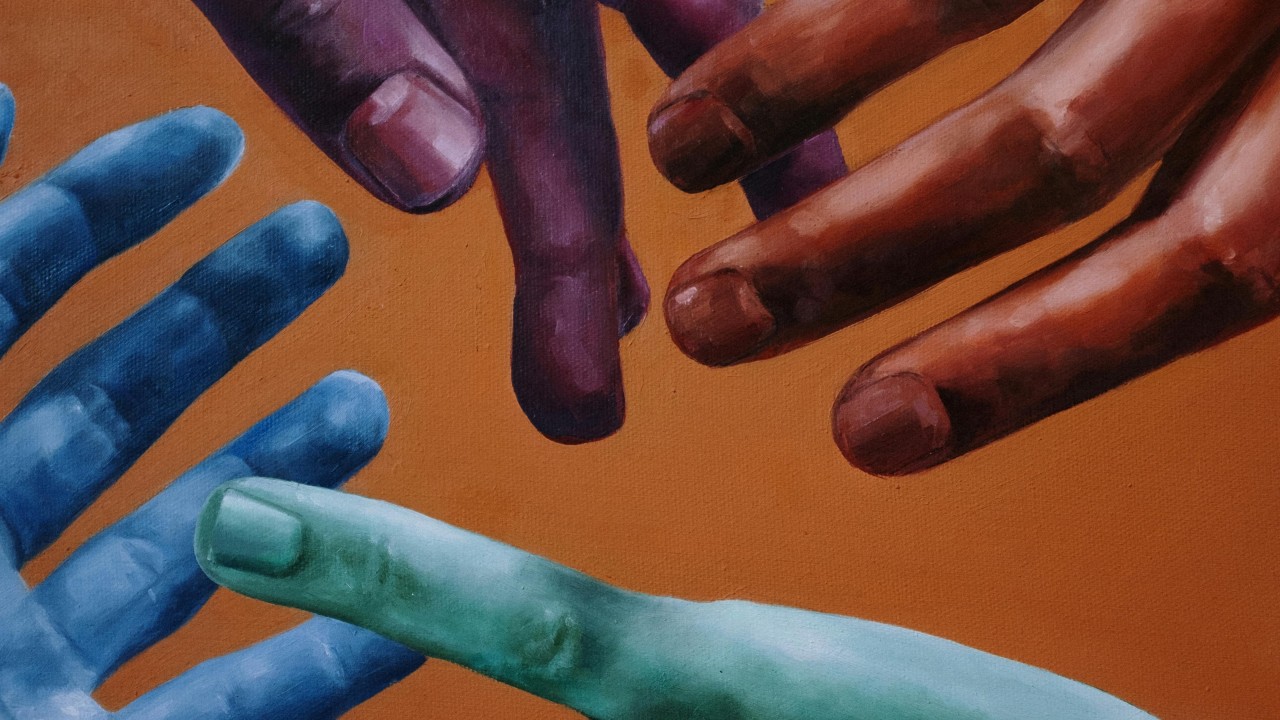
Let’s be honest: for the last century, “education” was basically a high-stakes game of Simon Says. We sat in rows, memorized the capital of a country, and were told that the highest form of intelligence was being a slightly more efficient filing cabinet than the person sitting next to us.
Well, the filing cabinets have been replaced by the cloud, and Simon has been replaced by a generative algorithm.
Spoiler alert: This is the best news we’ve had in a hundred years.
The Timeline: From Cogs to Creators
The 1950s–80s (The “Don’t Ask, Just Do” Era)
Core Skill: Obedience

The 1950s through the 1980s represent a fascinating, albeit rigid, chapter in educational history. This era was defined by the Industrial Model of Education, designed to produce a workforce capable of maintaining the post-war economic boom. The school was a factory, and the student was the product. During this period, education wasn’t just about literacy; it was about standardization. Skinner’s radical behaviorism dominated mid-century pedagogy. He argued that children could be “engineered” through positive reinforcement to be productive citizens.
Critics of this era pointed out that the most important lessons weren’t in the textbooks, but in the structure of the school day (bells, rows of desks, and permission slips). Children were trained to guess the “right answer” to please the teacher, rather than to think. Schools had become “factories of obedience” where the process of “being taught” was more important than actually “learning.”
This era eventually faced a massive reckoning in the late 1980s as the global economy shifted from manual/clerical labor to the Information Age, where “Just Doing” was no longer enough. We were trained to be reliable parts of a machine. If you could follow instructions without crying, you got a gold star.
The 1990s–2000s (The “Google It” Era)
Core Skill: Navigation

The 1990s and 2000s marked a seismic shift from the “Industrial Model” (obedience and standardization) to the “Information Model” (navigation and networking). This era was defined by the transition from students being “receptacles” of knowledge to students being “navigators” of it.
As the internet entered the classroom, a psychological gap opened between students who were born into the digital world and teachers who had to learn it as adults. Prensky’s article, “Digital Natives, Digital Immigrants“, highlighted that the brains of the new generation had literally changed because of their digital environment.
Our students have changed radically. Today’s students are no longer the people our educational system was designed to teach… They are native speakers of the digital language of computers, video games and the Internet.
Don Tapscott in Growing Up Digital: The Rise of the Net Generation was one of the first to identify the N-Gen (Net Generation), characterizing them by their independence and investigative nature.
We are seeing a shift from teacher-centered to learner-centered education. From absorbing material to learning how to navigate and how to learn… from teacher as transmitter to teacher as facilitator.
By the 2000s, the “Obedience” model of the 1950s was seen as a hindrance to the “Innovation Economy.” Success was no longer about following instructions; it was about solving problems that didn’t exist yet. Sir Ken Robinson’s work Out of Our Minds: Learning to be Creative (2001) highlighted that schools were killing creativity by clinging to industrial-era structures.
We have to go from what is essentially an industrial model of education… based on linearity and conformity and batching people. We have to move to a model that is based more on principles of agriculture… creating the conditions under which [students] will begin to flourish.
Thomas L. Friedman, The World Is Flat (2005) analysis of globalization sent shockwaves through education. He argued that if a job could be reduced to a set of instructions (the “Don’t Ask” model), it would be outsourced or automated.
“In a flat world, the most important thing you can learn is how to learn… because what you know today will be out of date tomorrow. The ‘CQ’ (Curiosity Quotient) and ‘PQ’ (Passion Quotient) matter more than IQ.”
Suddenly, the kid with the most facts wasn’t the smartest; the kid with the fastest dial-up was. The era’s core skill wasn’t memorizing facts—it was knowing where to find them and how to synthesize them.
In “Connectivism: A Learning Theory for the Digital Age” (2005), George Siemens proposed that in a “Google” world, learning is the process of connecting specialized nodes of information.
The pipe is more important than the content within the pipe. Our ability to learn what we need for tomorrow is more important than what we know today.
The 2020s (The “Identity Crisis” Era)
Core Skill: Panic (briefly), then Adaptation

The 2020s in education represent a profound “Identity Crisis.” Driven by the sudden displacement by the COVID-19 pandemic and the explosive rise of Generative AI, the era has moved beyond “finding” information (the Google Era) to questioning the very value of human knowledge and agency. As information became infinite and automated, the focus shifted from what we know to who we are as learners.
The pandemic didn’t just move classes to Zoom; it broke the social contract of schooling as a physical location, leading to a focus on mental well-being and social-emotional identity. UNICEF, Education in a Post-COVID World (2023) This report outlined the “RAPID” framework, highlighting that education is no longer just about academics but about “psychosocial health and wellbeing.”
The pandemic fundamentally changed the perspectives of both students and lecturers… leading to a reimagining of more resilient, effective, and equitable education systems.
Zhao argued that the Industrial Model is now officially obsolete. Success in the 2020s is about autonomy and the psychological ability to direct ones own life.
“Students must be change partners… we are moving from a world where we follow a path to a world where we must create the path.
The pandemic shifted the identity of school from a place of academic instruction to a hub for mental health and social-emotional stability.
Eleftherios Klerides, Stephen Carney, in Identities and Education: Comparative Perspectives in Times of Crisis (2021) explored how education is central to the project of collective identity formation during global moments of fear.
Education is crucial in moments of crisis… It aims at creating a space for understanding our current challenges and considering the potential of education to address them through the lens of identity.
CASEL (Collaborative for Academic, Social, and Emotional Learning), The SEL Roadmap (2020s) SEL moved from the periphery to the core of the curriculum in the 2020s.
Building skills to develop healthy identities and manage emotions… is essential for students to achieve personal and collective goals in a structurally imbalanced world.
With the launch of ChatGPT in late 2022, the 2020s entered a phase of questioning: If AI can do the work, what is the point of the student? UNESCO’s, Guidance for Generative AI in Education and Research (2023) on the AI boom highlighted the Identity Crisis by focusing on ethics and the human essence of learning that AI cannot replicate.
Learning is primarily experienced through human interaction… AI is only a tool, never the heart of the education system. It is not a question of replacing humans, but of equipping them.
Andrew Ng (Founder of DeepLearning.AI), highlighted in The Democratization of Intelligence (2023-2024) that while AI automates tasks, it forces a shift toward high-level strategy and ethical judgment.
AI is democratizing high-quality education… but its successful implementation requires addressing concerns related to cognitive disengagement.
AI arrived and started writing our emails, coding our apps, and making “art.” We panicked.
The 2020s represent an “Identity Crisis” because the core question of education has shifted from “How do I do this?” (1950s) or “How do I find this?” (1990s) to “Why does it matter that I do this?” This era is defined by the twin disruptions of the COVID-19 pandemic and Generative AI, forcing a move toward “Human Agency”—the ability to act with purpose in a world where answers are automated.
The Future (The “Humanity 2.0” Era)
Core Skill: Being Unreplaceable

Education has to stop being a race to the answer and start being a journey into the question. In the 1950s, we were a part of the machine. In the 2020s, we are the architect of the machine, and our greatest challenge is ensuring the machine doesn’t make us redundant.
Stockholm School of Economics, Human-AI Agency in the Age of GenAI (2025) research suggests that we are moving toward a “hybrid agency” where the human’s role is defining the problem, while the AI searches for the solution.
AI is expected to enable innovation on a distributed scale… giving employees access to reasoning capabilities, but the critical role of human agency determines the ethical and societal outcomes.
The definitive framework for this decade is the OECD Learning Compass 2030. It argues that in a world of VUCA (Volatility, Uncertainty, Complexity, and Ambiguity), the student must be the navigator, not just the passenger.
Success in education is about identity, agency and purpose. It’s about curiosity, compassion and the courage to put our cognitive, social and emotional resources into action… Schools need to develop first-class humans, not second-class robots. — Andreas Schleicher, Director for Education and Skills.
With the rise of LLMs, the “Identity Crisis” centers on the fear of Cognitive Disengagement. If a machine can write the essay, the student must find a new reason to engage with the process of thinking. U.S. Dept. of Education, Artificial Intelligence and the Future of Teaching and Learning (2023) report emphasizes the “Human in the Loop” philosophy, asserting that AI should augment, not replace, human judgment.
The challenge is that we are building tools of such immense capability that they threaten to automate the very cognitive functions we once prized. Ensuring the machine doesn’t make you redundant requires a pivot toward the qualities a machine cannot simulate: contextual wisdom, moral courage, and the ability to ask “Why?” instead of just “How?”
The 2020s demand that students act as “co-creators” rather than just consumers. The Learning Compass 2030 from OECD is the definitive framework of the decade. It moves away from rigid curricula toward Student Agency, emphasizing that students must learn to navigate through unfamiliar contexts.
The metaphor of a learning compass was adopted to emphasize the need for students to learn to navigate by themselves through unfamiliar contexts… instead of simply receiving fixed instructions or directions.
The ultimate irony is that we spent decades teaching humans to think like machines, only to realize that our survival now depends on our ability to be everything a machine is not. We need to stop treating life like a multiple-choice test and start treating it like an open-ended design prompt; we need to rejoice that the opportunity to evolve will continue to unfold as long as we remain the authors of the inquiry.
In an era where algorithms can provide every answer, we need to master the mystery. If we define ourselves by what we produce, we are merely competing with processors; if we define ourselves by what we imagine, we remain the masters of the silicon and beyond.
